A family farm on the Groenberg
A farm first granted in the 17th century, now run by a father and daughter who make wine from its old vines.
Wolves' Corner
There are no wolves in the Cape. The name comes from the wind.
The south-easter funnels through a corridor between the vines and the mountain and echoes like a howl. Whoever named the farm in the 17th century must have heard it too. The wolves found their way onto our labels: Impisi is Zulu for wolf, and Takaya is named after a real lone wolf.

The shaded side of the hill
Wellington is warm, but Wolvenhoek lies on the western side of the Groenberg. The morning sun has to climb over the mountain before it reaches the vines, so they spend the first hours of the day in the shade. The Cape Fold Mountains funnel the south-easter off the Benguela-cooled Atlantic.
The soils are decomposed granite, sand and clay. In a valley this warm, that bit of shade makes a real difference to how the grapes ripen.

Certified old vines
The Old Vine Project certifies South African vineyards of 35 years and older, with proof of planting date and continuous good farming.
The people behind the bottles

Eric Sas
Runs Wolvenhoek with his daughter Isabeau, from the vineyards to the cellar.

Isabeau Sas
Runs the wine production and export with her father, and takes the bottles from the Groenberg to the rest of the world.
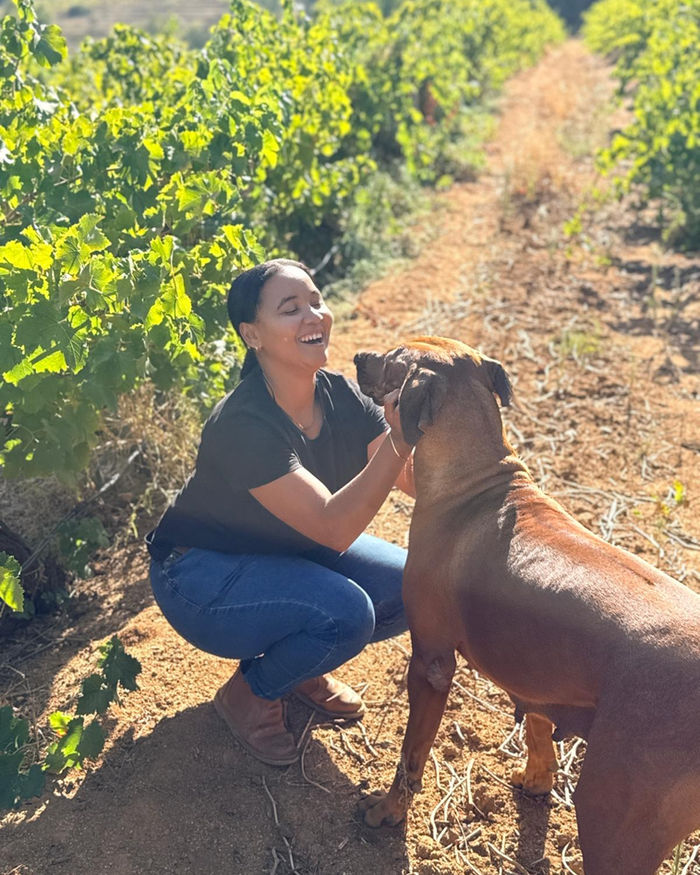
Fiona Van Der Westhuizen
Born and raised on Wolvenhoek. Today she runs the vineyards she grew up in.
Letters from the farm, a few times a year.
No spam. Unsubscribe with one click.